Eames Lounge Chair Production Labels and the Difference Between Vintage, Licensed, and Copy
Is the offered chair documented period Herman Miller production, later authorized production, or simply unsupported by records? The useful verdict is less glamorous than the listing: labels matter, but no label independently proves maker, date, component originality, matching ottoman, or value.
What do vintage, licensed, original, and copy mean for an Eames Lounge Chair?
An Eames Lounge Chair should be described by documented maker, production period, and component history, not by “authentic” alone. “Vintage” needs a defensible date range; “licensed” means authorized manufacture; “original” must identify particular factory-installed components; and “copy” means authorized production is not documented.
For this review, vintage means documented twentieth-century production accompanied by a supportable year, decade, or date range. The term is an editorial classification, not a manufacturer model designation. A seller who cannot support a production period should use “undated” or “date unknown” rather than allowing “vintage” to perform evidentiary work.
Manufacturer, date, component originality, and condition are separate findings. A documented Herman Miller Eames chair can be later production, heavily restored, or assembled with replacement components. Conversely, age, wear, and a familiar silhouette do not establish Herman Miller or Vitra manufacture.
An authorized Eames Lounge Chair is not necessarily a vintage Eames Lounge Chair
Herman Miller introduced the Eames Lounge Chair, model 670, and Ottoman, model 671, in 1956 and has continued authorized production. Vitra later became an authorized producer for its licensed territories. The Eames Office guidance on authenticity distinguishes authorized production from imitation, but authorization alone does not assign a chair to the 1950s, 1960s, or another period.
A recent Herman Miller Eames Lounge Chair is authorized manufacturer production, but it is not vintage under the definition used here. A Vitra example may likewise be authorized without being Herman Miller manufacture. Suitable invoice language might read “later Herman Miller production” or “Vitra licensed production, date not established.” “Original 1956 Eames chair” requires substantially stronger documentation.
The word original must identify the Eames Lounge Chair component being described
“Original” should modify a named component: shells, finish, upholstery, cushions, bases, mounts, hardware, or labels. If upholstery has been renewed, the invoice should say “reupholstered,” identify the material when documented, and avoid “all original.” Replaced cushions, repaired veneer, refinishing, renewed shock mounts, and substituted fasteners belong in the condition report.
The ottoman requires its own attribution. An associated model 671 ottoman should not be called the chair’s original matching ottoman unless records or consistent evidence support that relationship. The next question is which Herman Miller or Vitra production labels document the proposed attribution.
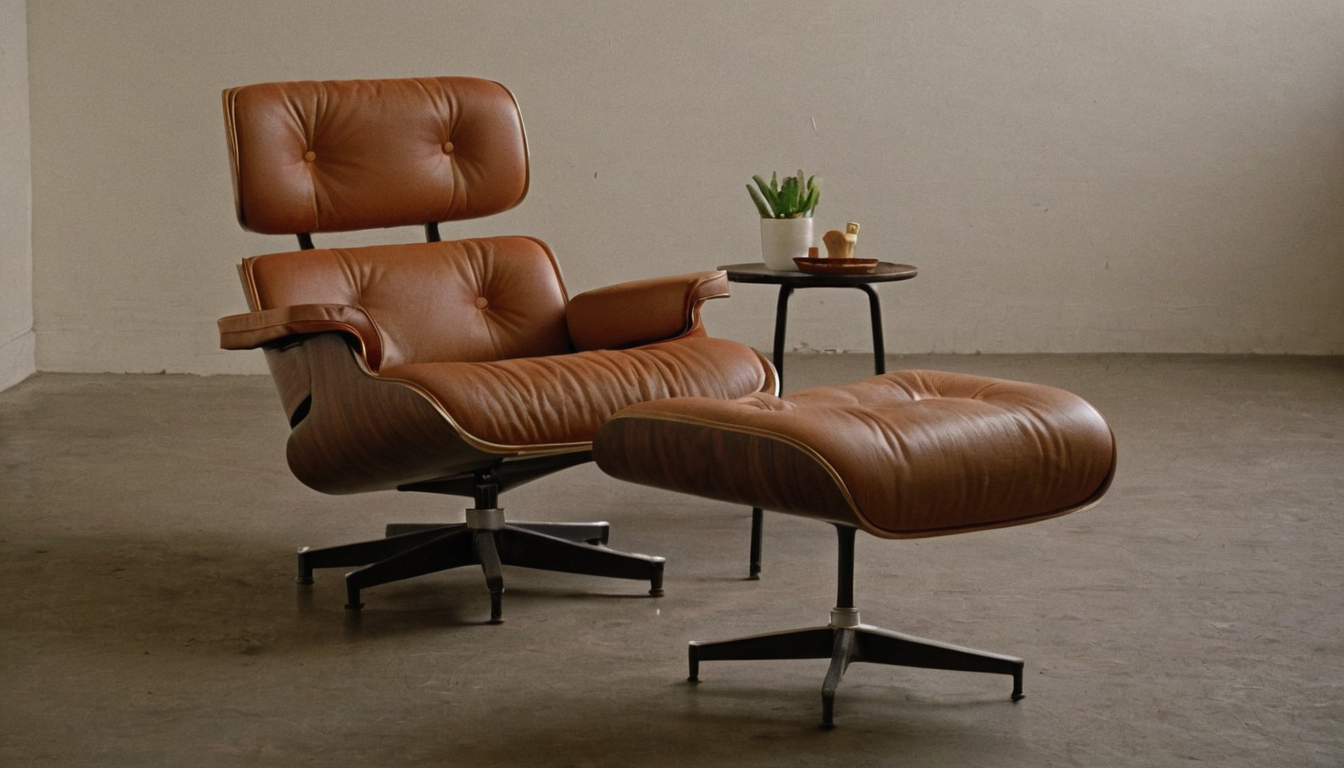
What do vintage, licensed, original, and copy mean for an Eames Lounge Chair shown with practical context cues.
Which production labels document a Herman Miller or Vitra Eames Lounge Chair?
A production label supports an Eames Lounge Chair attribution only when its design, wording, placement, and proposed date agree with the chair’s construction and manufacturing territory. Photograph the mark, but do not treat it as conclusive when the shells, base, upholstery, or ottoman indicate a different history.
Herman Miller Eames Lounge Chair labels must be matched to a documented date window
A Herman Miller paper label, foil label, medallion, stamp, inspection mark, or patent marking is evidence to investigate, not a self-dating certificate. The seller should compare the specific mark with dated Herman Miller catalogues, price lists, service records, archive photographs, or documented museum examples for models 670 and 671.
The comparison should record:
- complete wording, typography, color, material, and dimensions;
- the mark’s exact location on the chair or ottoman;
- the dated reference used and any uncertainty in its date range;
- whether the reference shows corresponding marks on both pieces; and
- evidence that a label was moved, covered, reproduced, or applied after refinishing.
No familiar Herman Miller label design should be presented as correct for every production period. If archive material does not establish a defensible window, the invoice should say “Herman Miller label present” rather than assign an unsupported year.
Vitra labels document licensed manufacture but not Herman Miller manufacture
A documented Vitra mark can support authorized European production, but it does not document manufacture by Herman Miller. The Eames Office authenticity reference identifies authorized producers; the buyer must still establish which manufacturer the physical label represents.
Vitra attribution requires the same discipline. Compare company wording, label design, model references, stated manufacturing location, and placement with dated Vitra catalogues or archive records. A legitimate later Vitra example should be invoiced as Vitra production, not converted into a “vintage Herman Miller Eames chair” through loose phrasing.
A missing or damaged Eames Lounge Chair label leaves the attribution unresolved, not automatically false
Refinishing, reupholstery, repair, and separation from old paperwork can leave a chair without a readable production mark. Absence does not establish that the chair is a copy, but it removes one layer of documentation.
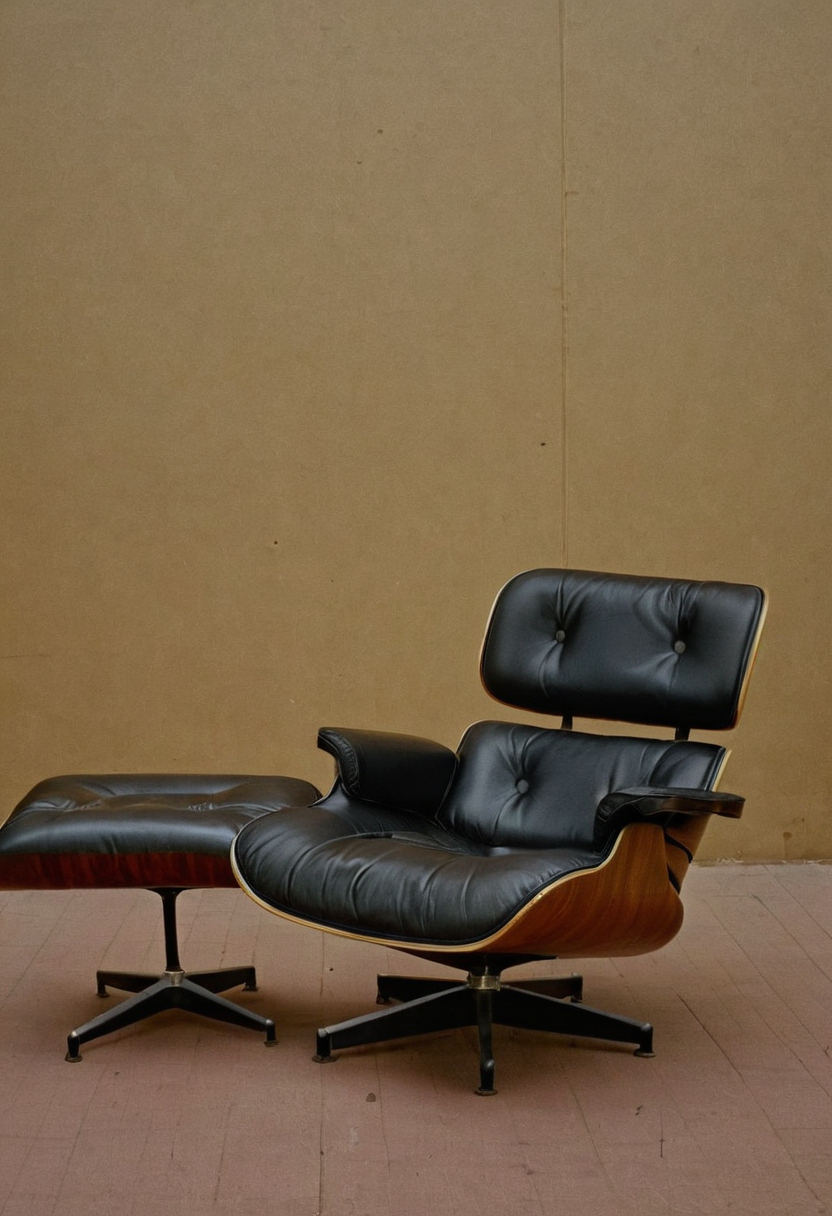
Which production labels document a Herman Miller or Vitra Eames Lounge Chair shown with practical context cues.
The condition report should describe residue, holes, discoloration, covered areas, or damaged markings without guessing what was formerly present. Attribution must then rest on provenance, invoices, construction, and component history. Those construction details must agree with the proposed production date.
Which Eames Lounge Chair construction details must agree with the proposed production date?
Construction evidence matters only when compared with specifications for the claimed maker, market, and period. No isolated feature turns an undated Eames Lounge Chair into documented period production.
Eames Lounge Chair shells and veneers must be compared with period specifications
- Record chair and ottoman dimensions, shell profiles, edge construction, veneer figure, finish, and visible manufacturing details.
- Compare those observations with period-specific catalogues, drawings, material schedules, and documented examples.
- Do not date a shell from a rosewood-like appearance. Refinishing, re-veneering, fading, and later veneer options can defeat that shortcut.
- Treat unexplained differences in dimensions, veneer, or shell construction as research questions, not immediate proof of a copy.
Eames Lounge Chair bases, mounts, and hardware require model-specific comparison
- Photograph both bases, glides, shock mounts, fasteners, hardware finishes, and every shell connection.
- Check chair and ottoman parts separately. A plausible base silhouette, screw arrangement, swivel action, or recline behavior does not establish maker or date alone.
- Ask whether mechanical components are period parts, manufacturer replacements, independent repairs, or undocumented additions.
Eames Lounge Chair upholstery and cushions often provide condition evidence rather than a production date
- Record upholstery, seams, buttons, zippers, cushion backs, clips, filling, and attachment methods.
- Separate period upholstery from manufacturer replacements, independent reupholstery, replaced foam, and mixed cushion sets.
- Keep inspection findings and photographs with the purchase file. The National Park Service Museum Handbook provides broader guidance on collection preservation and documentation.
The relevant issue is not whether replacement parts are permissible. It is how each replacement changes the chair’s description.
How do replacement parts change the description of an Eames Lounge Chair?
Replacement components do not erase a documented manufacturer, but they limit claims about originality and period condition. The seller should identify each replacement, distinguish manufacturer-supplied work from independent restoration, and avoid describing a substantially renewed chair as entirely original.
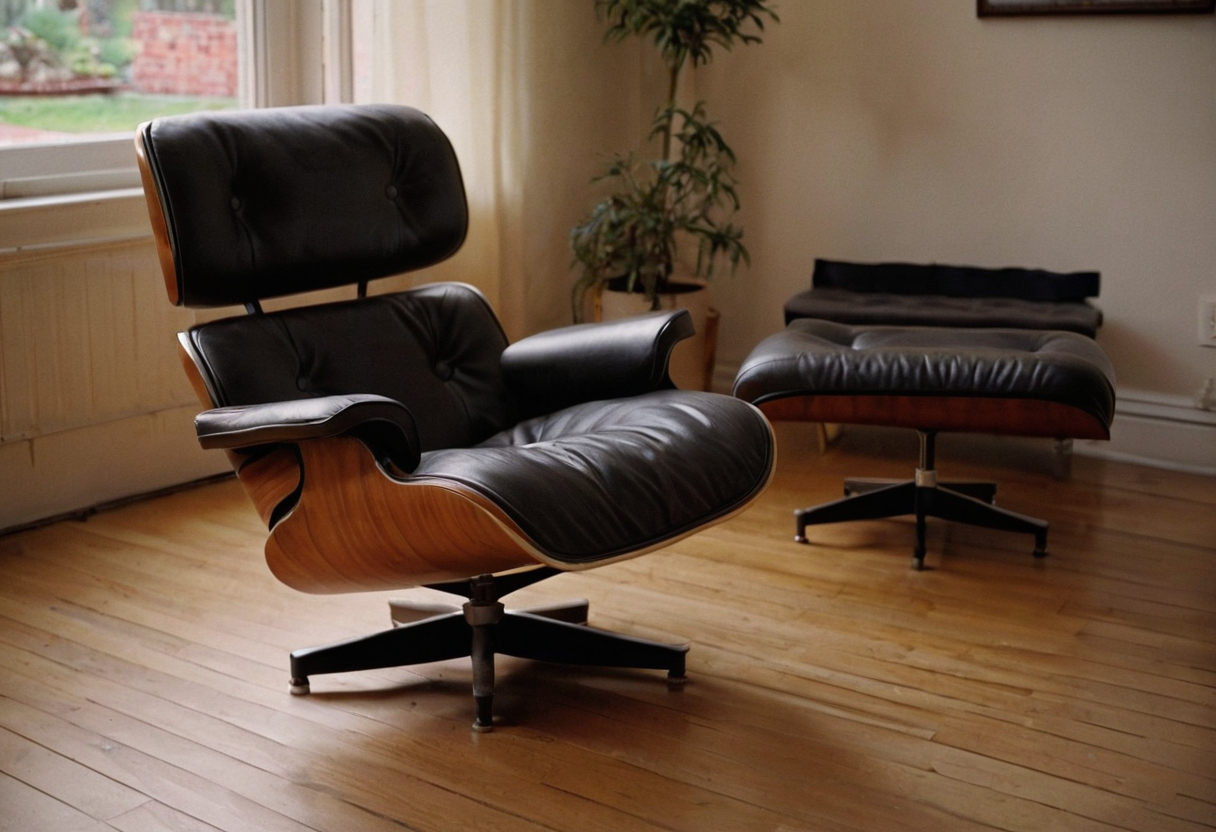
How do replacement parts change the description of an Eames Lounge Chair shown with practical context cues.
A restored Eames Lounge Chair needs a component-level condition report
A useful condition report separates attribution from condition. “Herman Miller production, independently reupholstered” may be supportable even when “all original” is not. Ask the seller to classify each element:
- Shells and veneer: original finish, refinished, repaired, patched, re-veneered, or not determined.
- Bases and hardware: original, replaced, refinished, or of undetermined date.
- Shock mounts and fasteners: retained, repaired, replaced, or not inspected.
- Cushions and upholstery: original, recovered over earlier filling, or replaced as complete assemblies.
- Glides and clips: original, service replacements, independent replacements, or unverified.
A claim that a part is “factory” or “manufacturer-supplied” needs an invoice, service record, packaging, or other maker-linked documentation. Visual compatibility establishes neither supplier nor installation date. Cleaned leather is not equivalent to new upholstery, and localized veneer repair is not equivalent to re-veneering.
A chair and associated ottoman should not be described as an original set without records
A chair and ottoman may both be documented licensed production yet lack evidence that they were sold together. Before accepting “original set,” check:
- Whether maker labels and proposed production periods agree.
- Whether veneers, finishes, bases, upholstery, and wear histories are consistent.
- Whether an order record, earlier invoice, or continuous provenance connects the pieces.
Without that connection, the invoice should say “chair with associated ottoman,” then attribute and describe each piece separately. Photographs and records should make those statements defensible before payment.
What evidence should a buyer request before purchasing an Eames Lounge Chair?
Before payment, obtain complete photographs, label details, dimensions, component history, ownership records, and a draft invoice. If period attribution remains unproved, the invoice should record that limitation rather than repeat the listing.
The Eames Lounge Chair photo set must show evidence that listing images usually omit
- Before an offer: Request high-resolution photographs of the chair and ottoman together and separately. Require views of every label, shell back, underside, edge, base, mount, fastener, cushion, clip, zipper, repair, and damaged area.
- Before the invoice: Obtain overall chair and ottoman dimensions, seat height, and relevant shell measurements. Request dated invoices, receipts, correspondence, service records, and historical photographs.
- Before delivery: For a remote, costly, or heavily restored purchase, commission an independent inspection covering labels, measurements, veneer, mounts, hardware, upholstery, repairs, replacements, and the relationship between chair and ottoman.
The Eames Lounge Chair invoice must state maker, date basis, and replacements
The invoice should identify model numbers, materials, visible labels, approximate date and dating basis, repairs, refinishing, replacement parts, and whether the ottoman is documented as matching or merely associated. Defensible formulations include “documented Herman Miller production,” “documented Vitra production,” “later licensed production,” “attributed to Herman Miller,” and “maker unsupported by available documentation.”
Inspection, return, transit-damage, and material-misdescription terms should be reviewed for the applicable jurisdiction. Contractual remedies require qualified legal advice. Adequate paperwork still leaves price as a separate question.
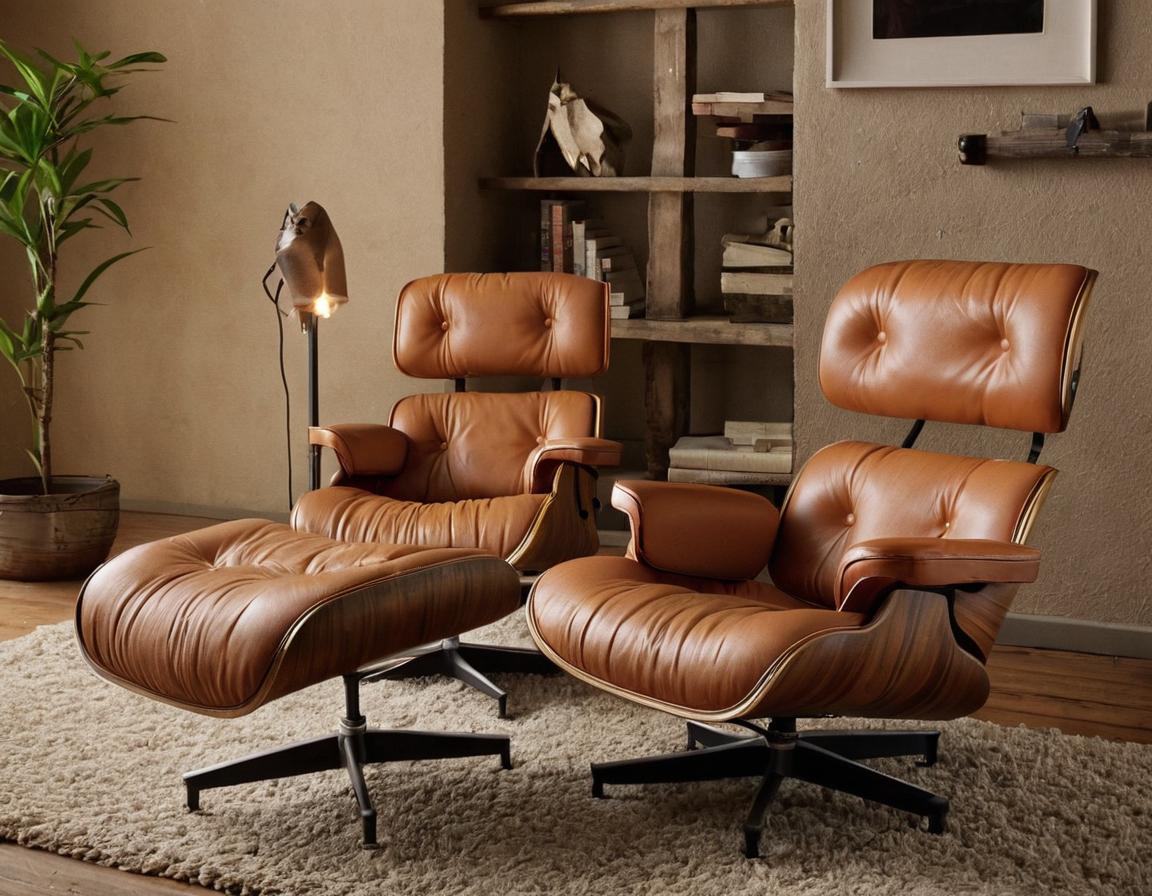
What evidence should a buyer request before purchasing an Eames Lounge Chair shown as an editorial planning reference.
Do dealer prices or auction results prove an Eames Lounge Chair is authentic or valuable?
Neither a dealer asking price nor an auction result proves maker, date, component originality, or present value. A comparison becomes useful only after matching manufacturer, period, veneer, upholstery history, restoration, condition, ottoman status, sale date, location, currency, and buyer’s premium.
Eames Lounge Chair auction comparables require matching attribution and condition
A dealer listing records an asking price, not a completed transaction. An auction record may report hammer price, price including buyer’s premium, or an undisclosed post-sale agreement. Those figures are not interchangeable. Review the stated attribution, lot photographs, condition report, corrections, and premium structure.
A period Herman Miller chair is not a direct comparable for later Herman Miller production, a Vitra example, a substantially restored chair, or an unsupported copy. Even examples within one category require comparable component history and condition. Market records illustrate how similarly documented objects performed at particular sales; they do not authenticate the chair on the invoice.
When should an Eames Lounge Chair be treated as undocumented rather than vintage?
An Eames Lounge Chair should remain undocumented when the claimed date, manufacturer, labels, construction, and component history cannot be reconciled through reliable records. The buyer need not call the chair counterfeit. The practical response is to pause, obtain an independent inspection, or require an invoice that omits unsupported vintage and manufacturer claims.
- Documented period Herman Miller: dated records or a defensible label chronology supports Herman Miller manufacture in the stated period, with consistent construction and component history.
- Documented later Herman Miller: records support Herman Miller manufacture but not a vintage date.
- Documented Vitra: records support Vitra manufacture and authorization without implying Herman Miller production.
- Altered licensed production: the maker is documented, while replacement upholstery, cushions, mounts, veneer work, refinishing, or other interventions are listed separately.
- Attributed production: physical evidence suggests a maker or period, but documentation remains insufficient for an unqualified statement.
- Unsupported copy: resemblance supplies the sales description while manufacturer identity and authorization remain undocumented.
Conflicting Eames Lounge Chair evidence requires a narrower attribution
Give greatest weight to maker archives and dated purchase or service records, followed by labels and other physical evidence, seller statements, and finally stylistic resemblance. A label that conflicts with dimensions, materials, hardware, ottoman construction, or disclosed replacement work requires clarification, not an accusation.
Defensible language includes “attributed to Herman Miller,” “later Herman Miller production,” “Vitra production with replacement upholstery,” and “chair with an associated ottoman.” “Original vintage set” is unsuitable unless records support maker, period, pairing, and the relevant components.
Independent inspection is warranted when labels conflict, alterations obscure construction, the chair and ottoman appear unrelated, or the seller cannot explain material differences. Exit before a deposit if attribution drives the price, before final payment if documents remain missing, or before shipment if inspection access is refused.
A copy should be described by its documented maker rather than by resemblance to the Eames Lounge Chair
A copy should be invoiced under its documented manufacturer and product specifications. The invoice should not imply Herman Miller, Vitra, Eames Office, or licensed status without supporting records. Questions about lawful manufacture, advertising, import, or resale in the United States require qualified intellectual-property counsel rather than dealer assurance.
Pay for the attribution the documents establish, not the attribution the silhouette invites.
Frequently asked questions
How can I tell whether an Eames Lounge Chair is vintage rather than later licensed production?
Establish a defensible production period from dated records, an appropriate label chronology, and construction consistent with that period. Authorized manufacture alone does not establish vintage status.
Does a Herman Miller or Vitra label prove an Eames Lounge Chair is authentic?
No. A label supports attribution only when its wording, design, placement, and proposed date agree with the object and reliable reference material. It does not independently prove the date or originality of every component.
Can an Eames Lounge Chair with replacement upholstery or cushions still be described as original?
The manufacturer attribution may remain valid, but “all original” would be misleading. The invoice should identify the chair as reupholstered or fitted with replacement cushions and describe other retained components separately.
Are Eames Lounge Chair replicas legal to buy, import, advertise, or resell in the United States?
The answer depends on the object, transaction, representations, intellectual-property rights, and applicable law. Obtain advice from qualified intellectual-property counsel rather than relying on a seller’s general assurance.
Can the quality of an Eames Lounge Chair replica establish manufacturer authorization or resale value?
No. Materials and workmanship may inform a condition assessment, but they do not establish authorization, manufacturer identity, production date, or market value. Those conclusions require documentation and properly matched market evidence.